
For more than fifteen years, WhyHunger has walked alongside Black-led coalitions and organizers working to reclaim food, land and power in the United States. At the center of this story are Black Urban Growers (BUGs) and the National Black Food Justice Alliance (NBFJA), two interconnected efforts that have helped shape the Black food sovereignty movement by creating space for relationship, leadership and collective vision.
Black Urban Growers: A Home for Connection and Collective Learning
Founded in 2010, Black Urban Growers emerged from a deep need for connection. Black farmers, growers, organizers and food systems leaders were often working in isolation, navigating racism, land loss, underinvestment and burnout while trying to build healthy food systems in their communities. BUGs created something rare and essential: a national convening space designed by and for Black food and farm leaders.
BUGs is not a membership organization and not a service provider. Instead, it functions as a catalyst—a place where people gather, share knowledge, build trust, and realize they are not alone. Its annual conferences have become one of the most important gathering spaces for Black food system leaders in the country, often described as part strategy meetings, part family reunions and part homecoming.
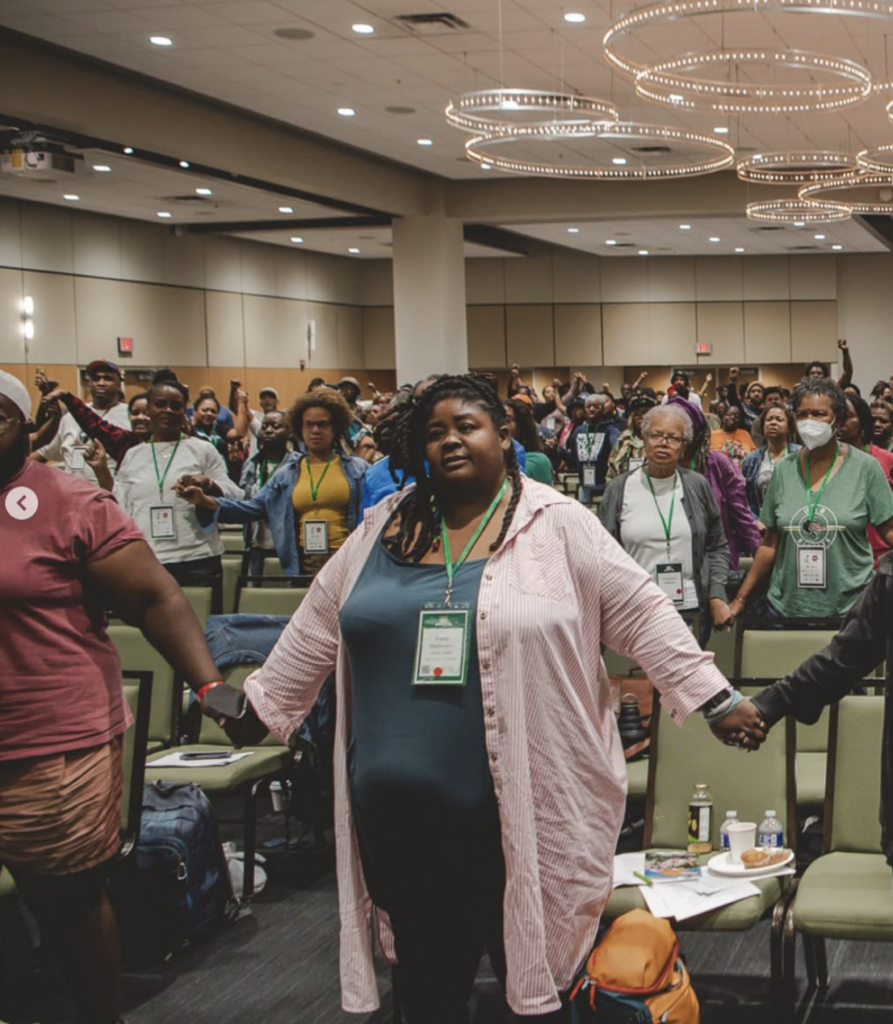
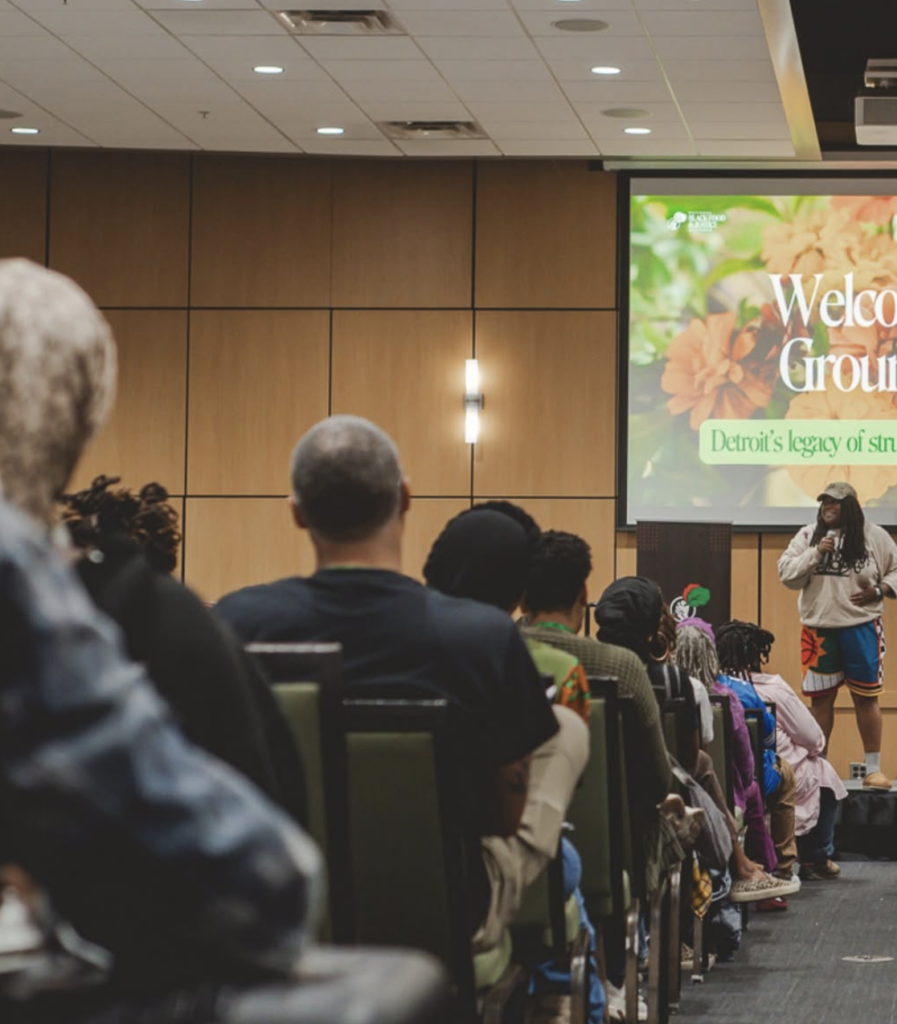 Each year, Black Urban Growers hosts a weekend-long national conference that brings together hundreds of Black farmers, growers, organizers, chefs and food justice leaders from across the country. The gathering serves as a space for skill-sharing workshops, strategy sessions, cultural celebration and collective visioning with the goal of strengthening relationships and building alignment across regions. The conference moves to a different host city each year, intentionally highlighting local, Black-led food system work and rooting the national movement in place-based leadership. Sundays are dedicated to regional organizing, grounding national conversations in local realities. Over time, BUGs has become a space where ideas are exchanged, collaborations are born and new organizations take shape, including the National Black Food Justice Alliance.
WhyHunger’s Role: Convening, Capacity and Stepping Back
From the beginning, WhyHunger played a quiet but critical role in helping BUGS take root. In the early years, this support looked like dedicated staff time, meetings in the WhyHunger office, long conversations with partners and infrastructure — the kinds of resources that are often invisible but essential. WhyHunger staff helped organize the very first BUGS conferences in 2010, offered technical assistance, covered travel costs for peer-to-peer exchanges and created shared tools and databases so organizers could learn from one another. This work helped lay the foundation for a movement to grow.
 Importantly, WhyHunger’s role was not simply funding and institutional support from a distance. Staff members were active participants in the early formation of BUGS, helping to convene conversations, build trust and shape the vision alongside other Black food system leaders, such as farmer and activist Karen Washington. In some cases, WhyHunger staff served as founding members of BUGS while also continuing their work within WhyHunger. This dual commitment reflected more than partnership; it demonstrated alignment in values. WhyHunger was not funding a movement from the outside, we were investing time, relationships, funds and organizational energy into something we believed in deeply. That presence helped stabilize the early years of BUGS, ensuring the work had consistent support while remaining rooted in community leadership.
WhyHunger also served as a meeting place: hosting planning sessions, helping with printing and logistics and connecting organizers across regions. Just as importantly, WhyHunger knew when to step back, allowing Black Urban Growers to remain fully accountable to the movement rather than to funders or institutions. This balance — stepping forward to support and stepping back to make space — is a defining feature of the partnership. Today, WhyHunger continues to support this work through funding, logistical assistance and active staff participation, ensuring that the movement has both the resources and the relationships needed to thrive.
From Convening to Coalition: The Birth of NBFJA
As relationships deepened through BUGs, organizers recognized the need for a different kind of structure— one that could move beyond convening into coordinated action, policy advocacy and shared strategy. Out of BUGs, the National Black Food Justice Alliance (NBFJA) was born.
NBFJA is a membership-based alliance that brings together Black-led organizations working across the food system, from farming and food access to policy, labor, and cooperative economics. While BUGs remain a vital convening and relationship-building space, NBFJA provides the infrastructure for collective decision-making and coordinated action. Today, NBFJA co-authors legislation, advances policy platforms, supports cooperative food businesses and builds alternatives to extractive economic systems. Its membership has grown so much that there is now a waiting list, a testament to both the demand for this work and the trust the alliance has built. WhyHunger continues to support through sustained funding, helping ensure that Black-led food sovereignty efforts have the resources needed to thrive and lead systemic change.
Food Sovereignty as Healing, Power and Legacy
At the heart of both BUGs and NBFJA is a commitment to Black food sovereignty, the right of Black communities to control their food systems, land, labor and futures. This work is deeply rooted in the history of the United States, as Black people were enslaved because of their agricultural knowledge, and later denied the land, resources and protections needed to grow their own food through discriminatory policies and violence.
Yet, Black farming traditions, cooperative land ownership and collective care have endured.
BUGs conferences make space for this full story — honoring elders, welcoming younger growers and passing down knowledge across generations. In these spaces, a 92-year-old farmer from Detroit might share wisdom with a first-time urban grower, reminding everyone that this movement is rich: old, wise, new and growing.
A Long View of Movement Building
The partnership between WhyHunger, BUGs and NBFJA is long and enduring, spanning nearly 17 years. It reflects a belief that movement building takes time, that relationships are as important as resources and that real change happens when people are trusted to lead their own work.
By supporting convening, connection and collaboration, WhyHunger has helped create conditions where Black-led movements can thrive, not just to address hunger today, but to transform the systems that create hunger in the first place.
In centering Black food sovereignty, these efforts help move all of us closer to a just, healthy and shared food future.
Check out their websites to learn more about the work and impact of Black Urban Growers and the National Black Food Justice Alliance and to explore how you can support Black-led food sovereignty in action.