By John Cape, WhyHunger’s Vice President of Program Strategy and Impact
It was early in the morning when I climbed into the bed of the truck. I perched on the edge and tucked my leg behind the spare tire. Others hopped in and we exchanged greetings: “¿Cómo amaneció?” (How’d you sleep?). Dawn broke as we turned out of the hotel onto a dirt road. We shifted our weight underneath the jostling truck as we started to climb the mountain.
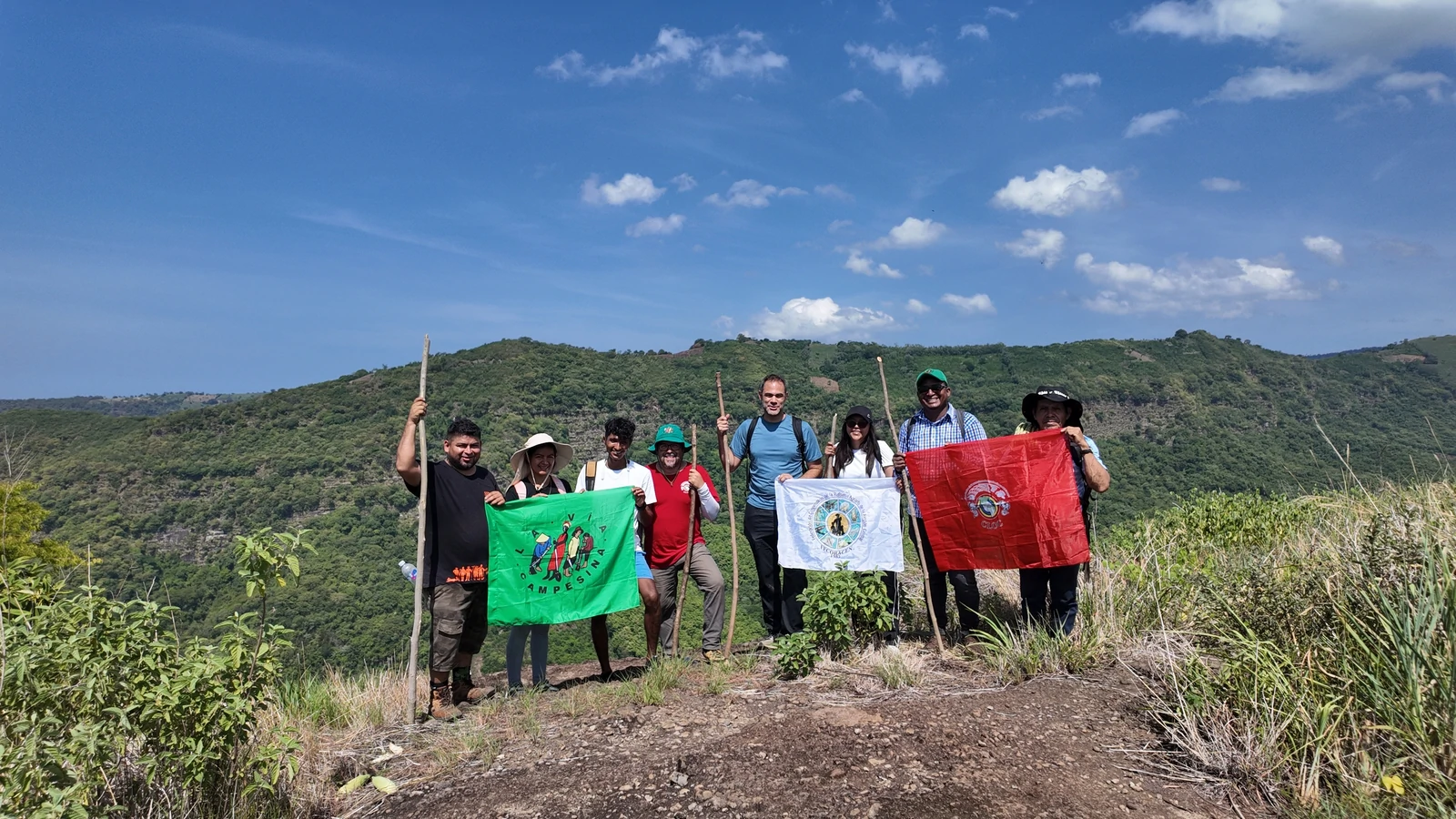
We reached Don Gregorio’s home an hour later. I jumped out of the truck, stretched my legs, and followed Don Gregorio and my colleagues as we continued up the mountain on foot. We hiked for an hour on a well-worn trail before reaching the precipice of the mountain where we were greeted by small plots of beans, corn, squash and peppers, part of the Acahuaspan Agricultural Production Cooperative.
This was one of many farming collectives I visited during a recent trip to El Salvador as part of a solidarity delegation organized by one of WhyHunger’s long-time partners, La Via Campesina, the largest peasant movement in the world. We were hosted by one of their local members, the Federation of Agrarian Reform Cooperatives of the Central Region (FECORACEN), who WhyHunger has supported and accompanied since 2020.
I’ve spent a lot of time throughout my career visiting with community-based partners in the Global South, but I was particularly eager to see FECORACEN’s work, given the long-standing investments they’ve made in the communities they support.
FECORACEN was founded in 1985. They provide financial resourcing, technical support, legal support and advocacy for 30+ farming collectives across El Salvador. They help to launch women’s savings groups across the communities where they work. They also run Tutalyu Peasant Agroecological School, which hosts small-scale farmers who come to learn sustainable farming practices to increase the health and yield of their farms, which strengthens local food security.
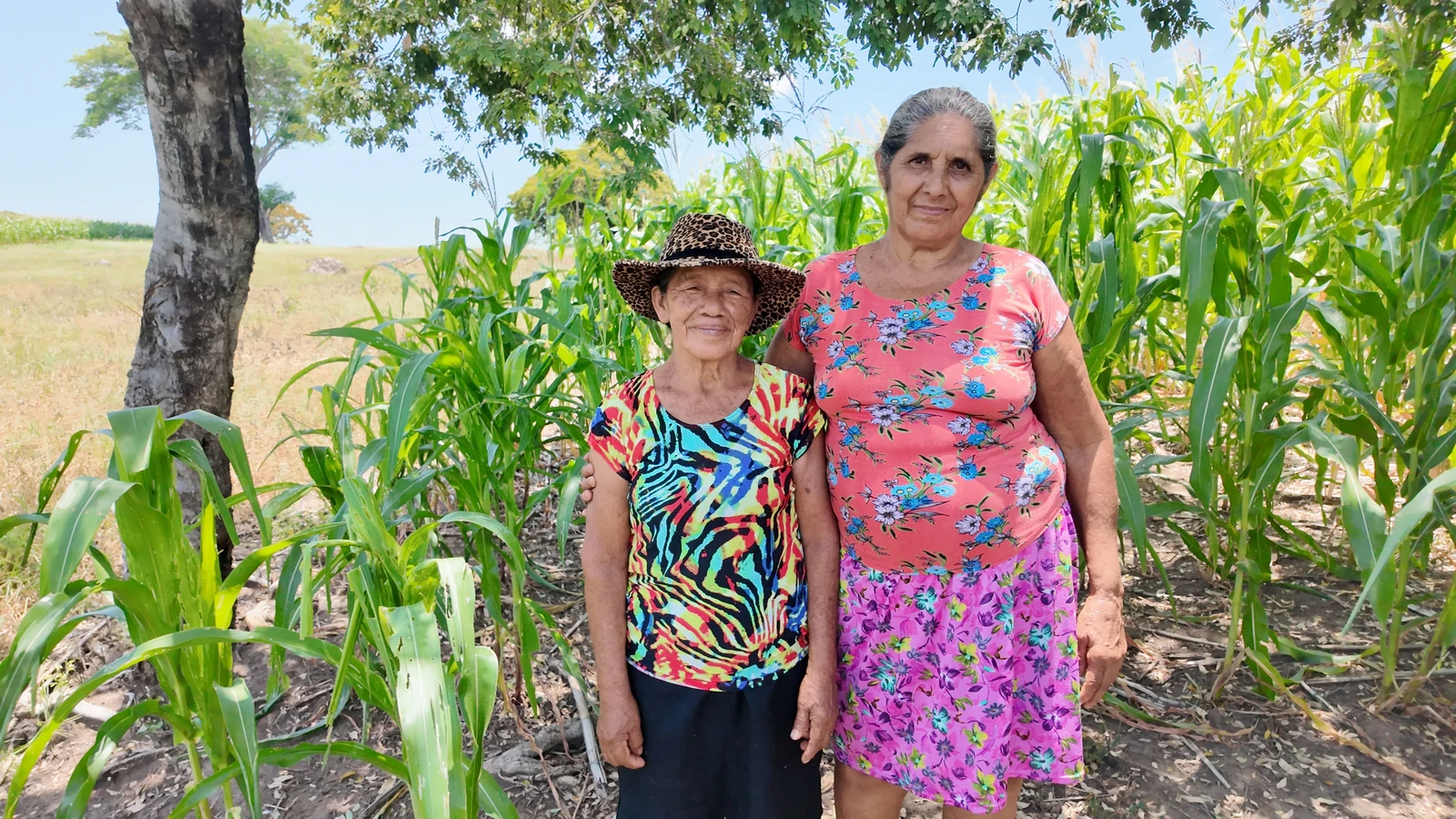
The urgency of FECORACEN’s work was apparent. I spent time in fields with women who showed us corn that had withered in the heat and were infested with worms that thrive in the current drought, exacerbated by el Niño, which is challenging farmers across Central America. Because they lease the land on which they farm, they couldn’t afford to invest in developing long-term perennial crops, such as fruit trees, that create shade and provide other benefits that help to mitigate the impact of climate change.
FECORACEN has supported many collectives in purchasing their own land, so they can diversify their crops, invest in infrastructure, adopt more sustainable farming practices, and increase their profits. We visited San Isidro Agricultural Production Cooperative, a collective of 170 farmers, that succeeded in purchasing their land in 2024. That investment has permitted them to build a more sustainable enterprise, including installing coffee processing equipment. With FECORACEN’s support, they are working towards having capacity to export their products, which will significantly increase revenue for the community.
Supporting community-based and community-owned agriculture is critical for strengthening local economies, improving food access, and mitigating the effects of climate change and global food supply shocks. I visited communities, like Las Mesas Agricultural Production, that reinvested growing community wealth into the development of their community. Led by a group of 16 women who initially came together as members of a community savings group, this community has succeeded in bringing running water, and soon, electricity, to the 32 families who live in the town. These initiatives have taken years of work, raising funds and patiently negotiating public utility bureaucracies.
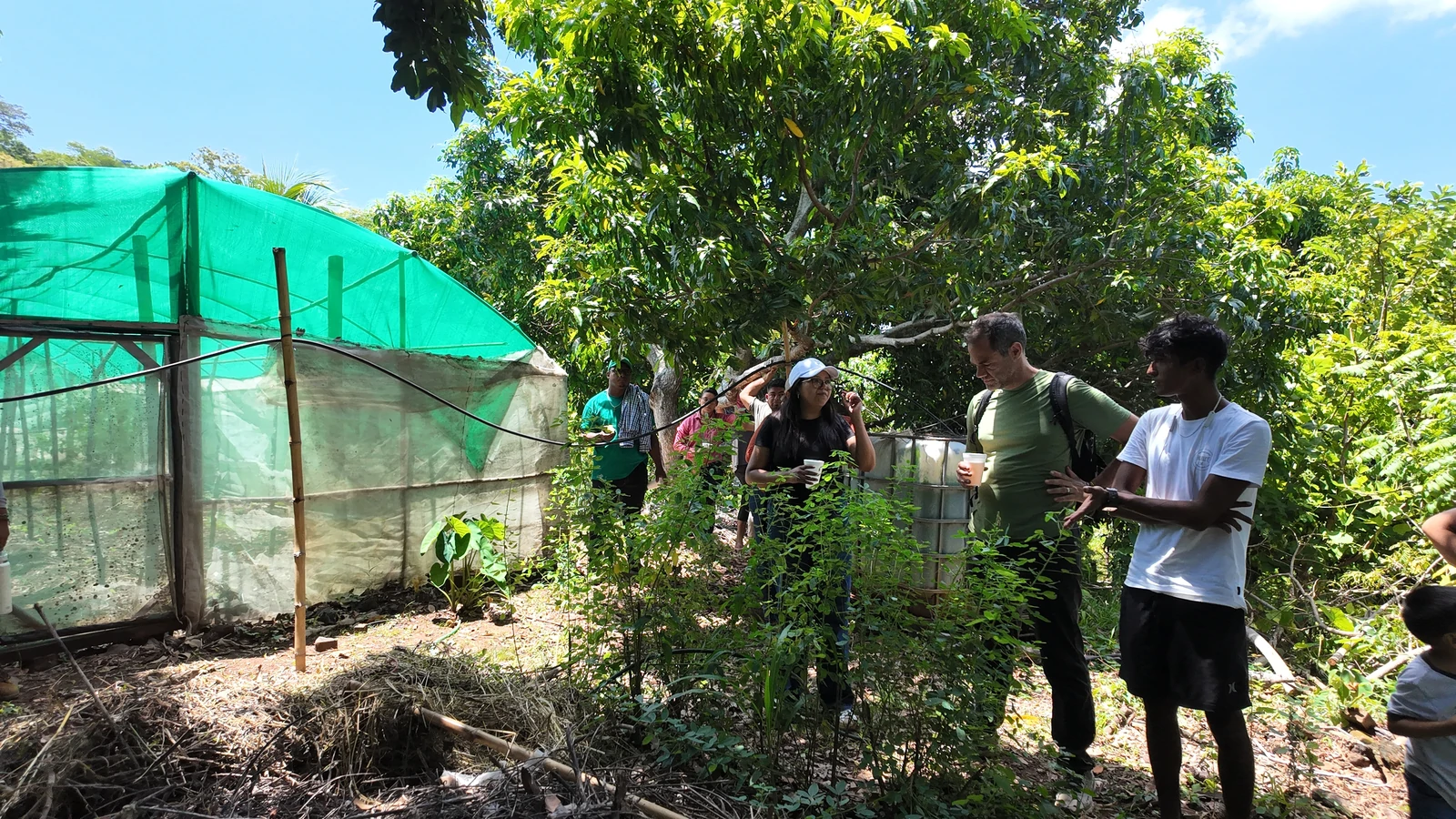
Organizations like FECORACEN are critical for providing the long-term support needed to realize sustained gains for local communities. They accompany communities for years, building trusting relationships that last far longer than any government administration. They build resilient networks of leaders and facilitate convenings between farmers who teach each other the knowledge they’ve sharpened through their lived experience on the land. They provide financial resources and technical support that are hard for rural communities to access.
It is easy to succumb to cynicism and pessimism in the face of the extreme challenges we’re facing — climate change, income inequality, political conflict, social division — but visiting these communities bolstered my hope for our collective future.
I don’t believe in heroes or silver bullet solutions. I’m not looking to the horizon for something, or somebody, to save us. What I believe in is the hard work of individuals, working together, to cultivate the land, develop their communities, and build wealth and health for themselves, their families and their neighbors.
I believe in the efforts of smart and dedicated individuals, like the staff at FECORACEN, who create the enabling conditions that allow communities to flourish and strengthen food systems from the bottom up. I believe in La Via Campesina, which connects organizations like FECORACEN with other peasant leaders around the world, so they can learn from each other and build power together. FECORACEN and La Via Campesina, in addition to the hundreds of other community-based partners and global movements that WhyHunger supports, are doing the work that matters. This work demands our investment of time, resources and attention, and yields real results and hope for a just, hunger-free future.
Learn more:
Follow FECORACEN’s work here.
Read about La Via Campesina here
Explore WhyHunger’s Agroecology Schools Project here.