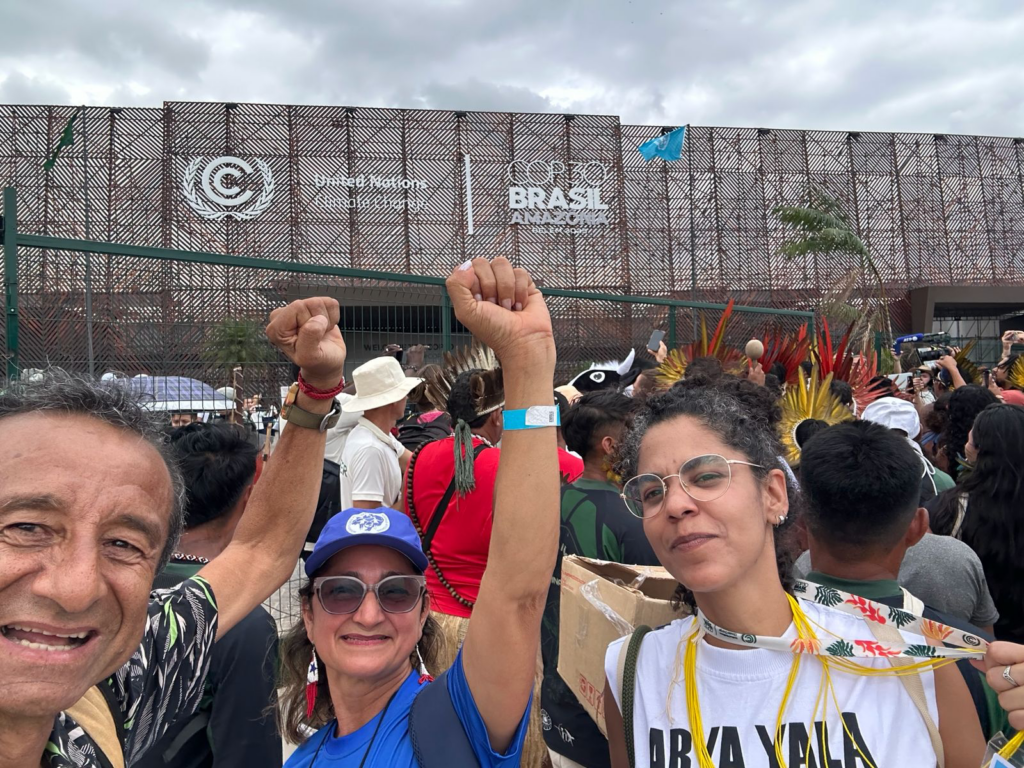
Last month, government officials, business leaders, social movements and civil society from across the globe gathered in Belém, Brazil for the 30th annual United Nations Climate Change Conference, better known as COP30.
The summit was designed as a gathering space for accountability, strategy setting and decision-making by the nearly 200 countries that signed on to the original UN climate agreement in 1992. COP30 is self-described as the place “where the world comes together to agree on the actions to address the climate crisis.”
As the summit wrapped, the event’s impact was summarized in media coverage ranging from outrage about the lack of equity between the wealthy nations who contribute to climate change and those who are left to suffer through its impact, to the failure of summit decision-makers to reach new fossil fuel phaseout agreements and the massive protests led by Indigenous communities, Brazilian youth and activists from around the globe.
One major criticism was the undue influence by corporate interests, particularly from the fossil fuel industry. Reports revealed that one in every 25 attendees represented the fossil fuel industry. Social movements and civil society groups condemned this “corporate capture” of climate negotiations, noting the vast disparity as they struggled to get access to the event for themselves, while more than 1,600 fossil fuel industry representatives and lobbyists attended.
Some of the main concerns we’ve heard from our partners and allies include:
- High Numbers of Fossil Fuel Lobbyists and Corporations Influencing Negotiations: The significant presence of fossil fuel lobbyist and corporations, including companies like Edelman, Bayer, Vale, and Nestle with participants embedded within national delegations, helped block progress on key climate justice demands. This included the failure to secure a clear “roadmap” or commitment to phase out the use of coal, oil, and gas, which are the primary causes of climate change.
- Promotion of False Solutions: This higher corporate presence leads to the promotion of market-based mechanisms and technological solutions (like carbon markets and certain geoengineering initiatives) that sustain profit motives but fail to address the root causes of the climate crisis or historical injustices. Social movement leaders at our partner La Via Campesina called out the proliferation of “false solutions such as ‘Climate Smart’ and ‘resilient’ agriculture to greenwash their destruction and land grabbing, sidelining real agroecological solutions.”
- Exclusion of Grassroots Voices: The focus on corporate and industry voices overshadowed and excluded the demands and rights of Indigenous communities, farmers, and other frontline communities. In a coordinated act of resistance, over 30,000 grassroots voices from 62 countries participated in the parallel event, The People’s Summit, which focused on: territories and food sovereignty, historical reparations and environmental racism, just transition, democracy and internationalism of the people, just cities and vibrant peripheries, and popular feminism and women’s resistance.
Despite the setbacks, the communities with the most at stake in the climate crisis are not giving up. Declarations from The People’s Summit chart a path forward that demands leadership from diverse cultures and worldviews and a Just Transition framework.
An international delegation led by C-CONDEM (The National Coordination for the Defense of the Mangrove Ecosystem in Ecuador), MPP (The Movement of Artisanal Fishermen and Fisherwomen of Brazil) and the World Forum of Fisher Peoples shared a powerful reflection solidifying their resolve:
“Governments come and go; peoples remain. And it is our responsibility to continue raising the voice that comes from the land, from the sea, from the mangroves of that motherhood that resists. From there, we will continue walking, learning, and moving forward.”