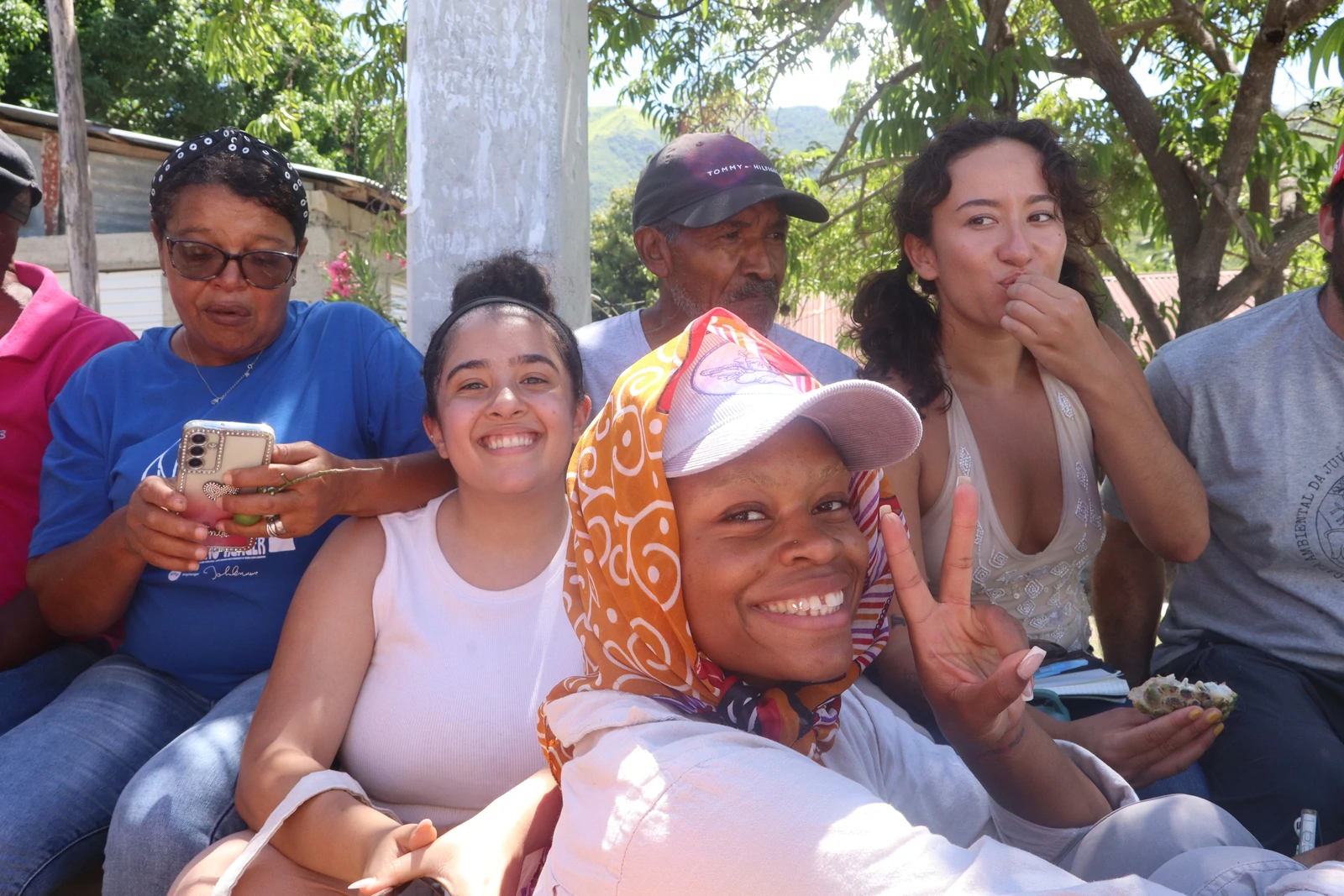
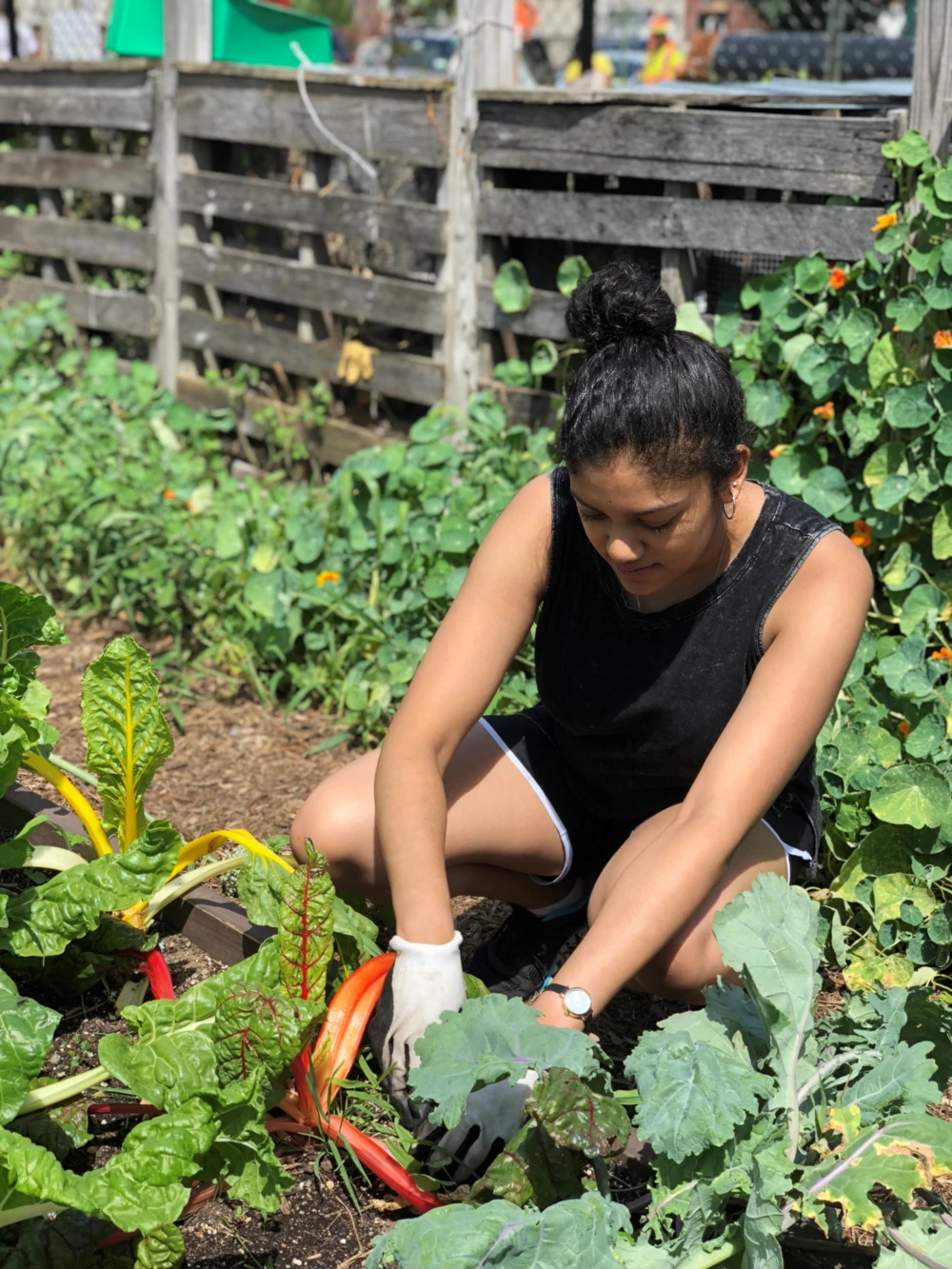
Twenty-five organizers, farmers, educators and movement leaders from ten agroecology schools across four continents gathered in the Dominican Republic with one shared purpose: to strengthen a global movement for food sovereignty.
For one week in July 2025, the classrooms of WhyHunger’s Agroecology Schools Project extended far beyond the virtual space. Hosted by IALA Mama Tingó at the Confederación Nacional de Mujeres del Campo (CONAMUCA) in Santo Domingo, the first in-person encounter of the Agroecology Schools Project brought together participants from WhyHunger’s first two Agroecology School cohorts for a week of political education, cultural exchange, collective reflection and movement building.
Representing grassroots movements from Colombia, the Dominican Republic, Spain, Thailand, Panama, the United States, Peru, Brazil and Sri Lanka, participants arrived carrying not only their experiences, but also the histories, struggles and dreams of their communities. Together, they explored what it means to build food sovereignty through agroecology, not simply as a way of farming, but as a way of organizing, resisting and imagining a more just future.
Rooted in Relationship
The encounter opened with a traditional mística, an opening ceremony that reflects the movement’s liberatory vision and the shared belief that a more just and sustainable future is possible. Each participant contributed an object representing their movement: seeds, soil, water, banners, poetry, books and symbols from their territories. Together, they created a collective altar that remained at the center of the gathering throughout the week. This opening reflected one of the encounter’s central ideas: movements are built through relationships before strategies.
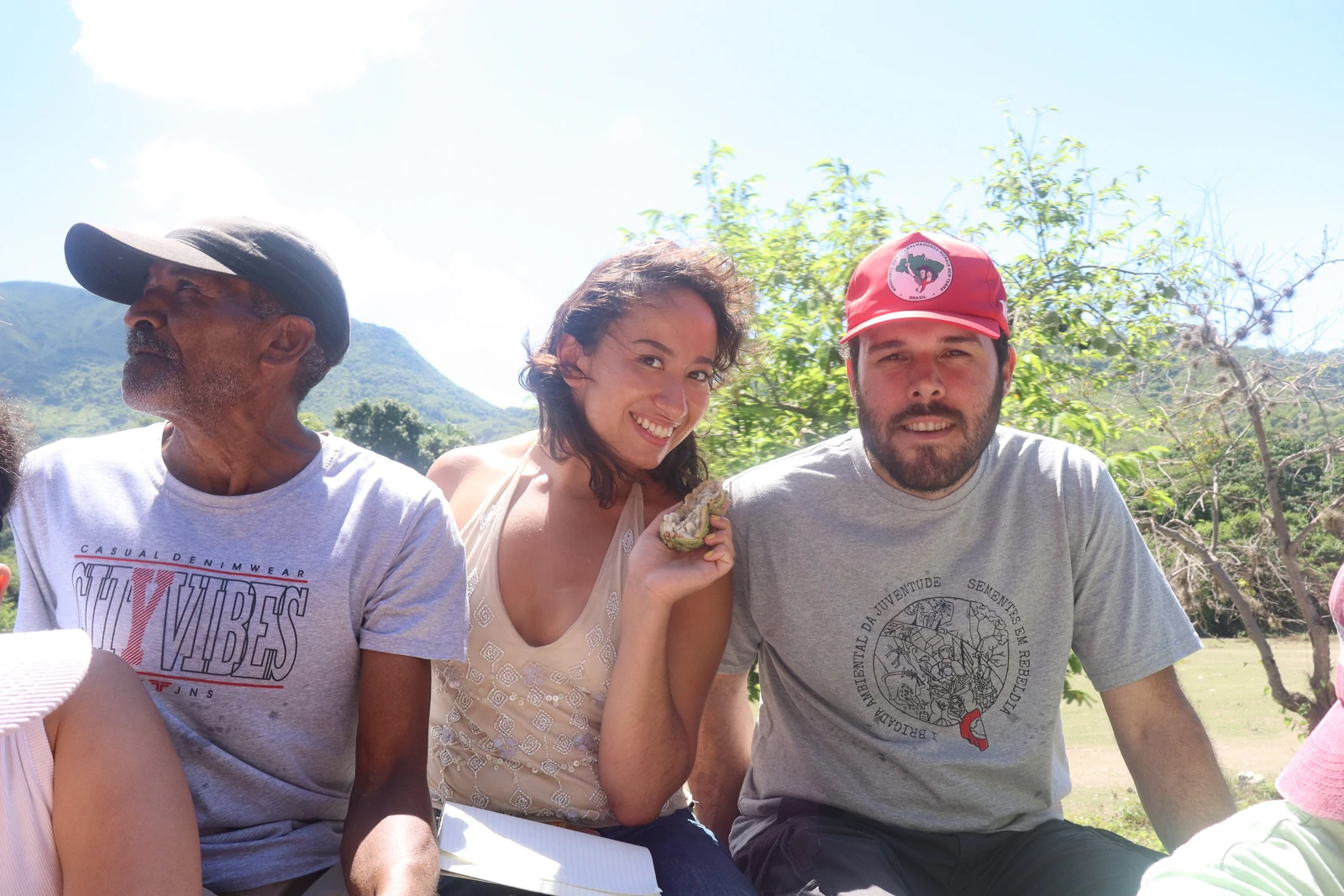
Over the next several days, the group shared meals, visited farms, debated ideas, exchanged songs and stories, and learned from one another’s lived experiences. Listening, learning, unlearning, debating, cooking, farming, dancing, and swimming, all while building a shared understanding of agroecology.
Ten Schools, One Shared Vision
The encounter united ten unique Agroecology Schools, each responding to the realities of its own territory while contributing to a broader global movement.
Participants represented:
- IALA Mama Tingó (Dominican Republic)
- IALA María Cano (Colombia)
- IALA Ixim Ulew (Central America)
- The Shepherd School (Spain)
- Assembly of the Poor (Thailand)
- MST – Landless Workers’ Movement (Brazil)
- Eastern Woodlands Rematriation (United States)
- Kuna Youth Movement (Panama)
- FEMUCARINAP (Peru)
- NAFSO (Sri Lanka), which participated remotely after visa challenges prevented travel.
In the two years leading up to the encounter, the participants met virtually with each school taking turns presenting the political realities shaping their work, from defending Indigenous territories and rematriating land to supporting mobile pastoralists, organizing peasant communities, advancing women’s leadership, and reclaiming traditional ecological knowledge. Although every community faced different challenges, common threads quickly emerged: land rights, climate justice, seed sovereignty, youth leadership, and the defense of community knowledge.
Agroecology Is More Than Agriculture
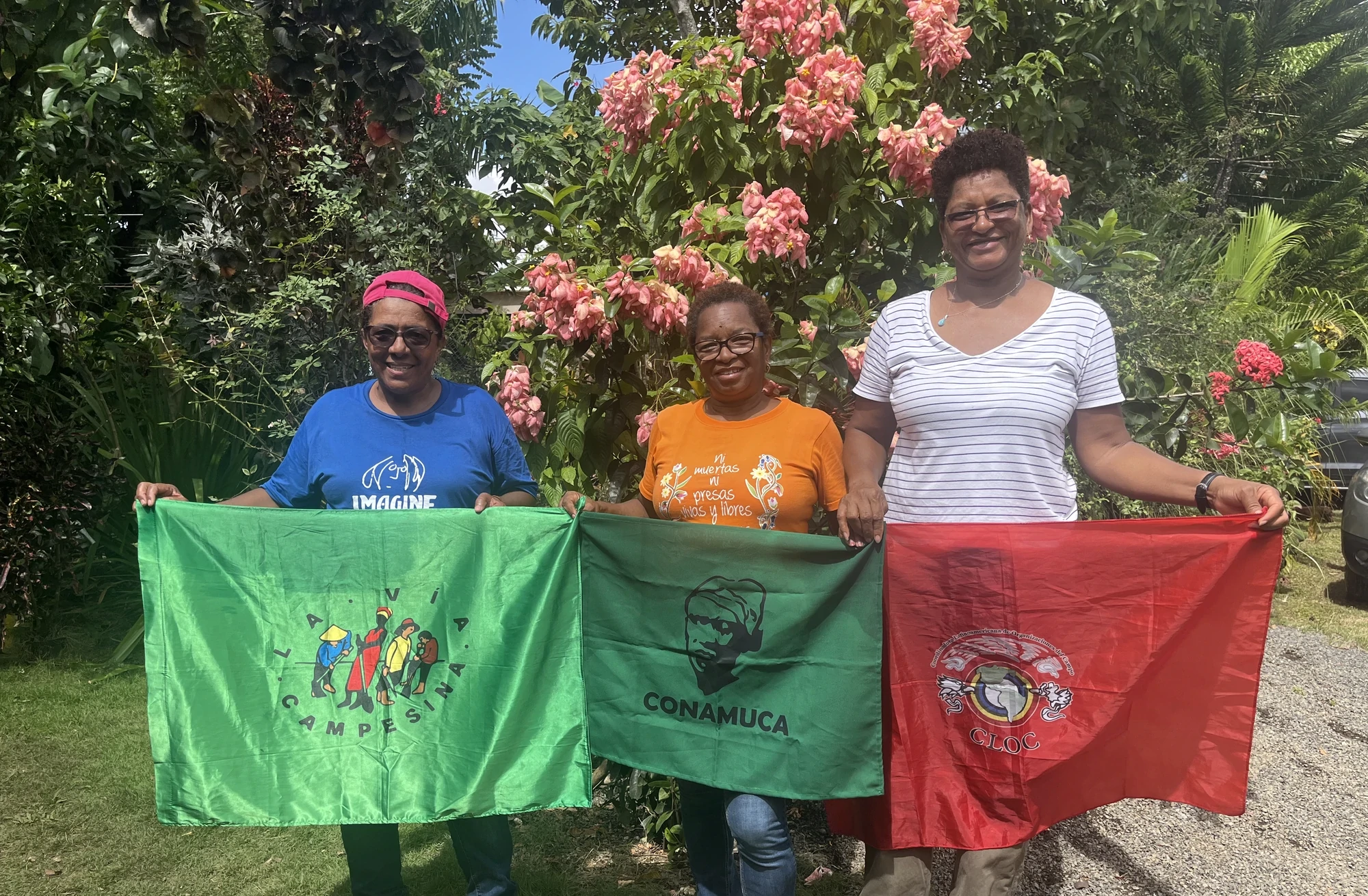
One of the strongest themes woven throughout the week was a shared understanding that agroecology cannot be separated from justice. Through presentations, discussions and group work, participants explored agroecology as a political, cultural and social movement, one that confronts land grabbing, extractive development, corporate control of food systems and the ongoing impacts of colonialism.
For Anne Lannape of AOP in Thailand, these struggles are inseparable from the practice of growing food. “Agroecology is about how we grow our food in harmony with nature… but we are also fighting for the right to land and the right to natural resources. Political action is at the heart of our work.”
This understanding was echoed by Lourdes Huanca of FENMUCARINAP in Peru, who connected agroecology to cultural identity, economic independence and collective action: “Agroecology is defending the land. Agroecology is defending your culture. Agroecology is empowering yourself economically. Agroecology is solidarity among ourselves.”
Professor Daniel Bela of Cuba reinforced this perspective, encouraging participants to see agroecology through the lens of popular education, collective knowledge creation and systemic transformation rather than simply agricultural techniques. His presentation connected food sovereignty with political sovereignty, community resilience and climate action.
Learning Across Borders
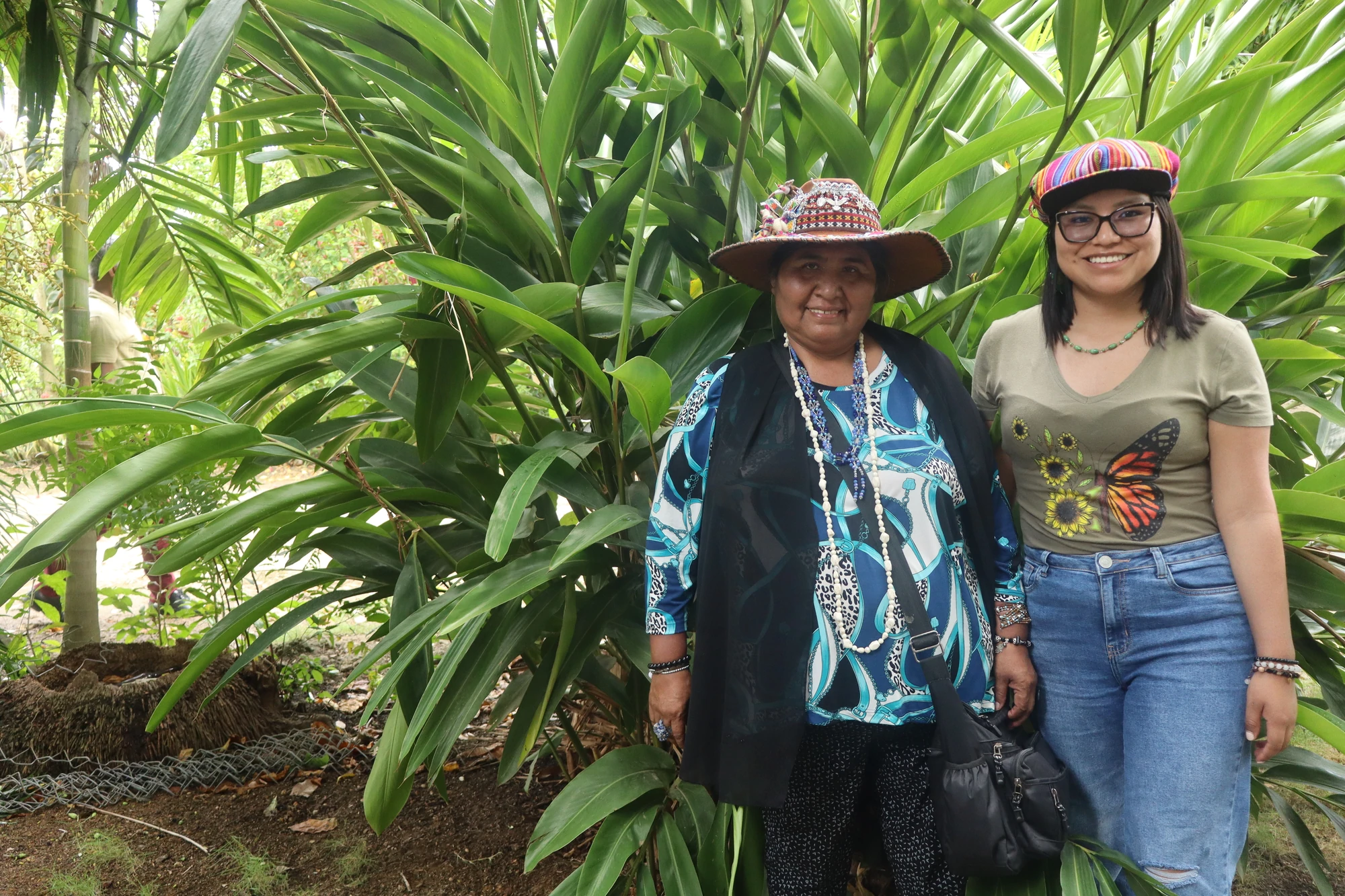
The encounter created space for something rarely possible through virtual meetings alone: deep dialogue between movements working in vastly different contexts.
Through conversations about feminist organizing, women’s leadership, Indigenous and peasant knowledge, youth political education, pastoralism, climate resilience and popular education, participants explored how their experiences and struggles intersect across cultures and territories.
For Lidia Paredes of CONAMUCA in the Dominican Republic, these exchanges reinforced the importance of recognizing knowledge already rooted in communities. “For us, agroecology has come not to replace, but rather to support the work that we do in our communities and that our grandmothers and grandfathers did in the past,” she explained. She also described agroecology as “our way of fighting, our way of producing healthily, and our way of moving forward and producing without GMOs, in a natural way.”
That connection between people, land and knowledge was echoed by Ismael Minetti of IALA Mama Tingo in the Dominican Republic, who described agroecology as fundamental to understanding the natural world. “It is where humans interact with the environment, become familiar with the soil, and learn how to use their surroundings wisely.”
Open plenaries encouraged participants to ask difficult questions, challenge assumptions and learn from one another’s approaches. Rather than seeking one model that fits every community, the gathering embraced different experiences while strengthening a shared sense of purpose. As conversations unfolded, participants recognized that while their political realities differ, many of the root causes of food injustice remain remarkably similar across regions and cultures.
Reimagining Philanthropy
The encounter also created an opportunity for honest conversations about power and funding. WhyHunger’s Global Movements Program facilitated discussions about philanthropy, emphasizing that meaningful support means accompanying movements, not directing them.
Participants explored how funders can strengthen long-term organizing rather than impose outside agendas, while acknowledging the challenges movements face in securing sustained resources.
These conversations reflected WhyHunger’s broader commitment to relationship-based partnership and movement accompaniment, an approach rooted in listening, accountability and shared learning. Just as agroecology recognizes the knowledge and leadership already present within communities, meaningful philanthropy must recognize movements as the leaders of their own work.
Building the Future Together
Perhaps the greatest outcome of the encounter was something less tangible than any workshop or presentation: a strengthened global community.
For many participants, this was the first opportunity to meet in person after months of virtual exchanges. New friendships formed, ideas evolved and future collaborations began to take shape. Participants left not only with new knowledge, but with renewed confidence that they are part of a growing international movement working toward food sovereignty.
For Angie Aguilera of FENSUAGRO in Colombia, the power of these connections speaks to one of agroecology’s most important lessons: “Today the power of organization and community is underestimated because the system pushes us to be individualistic. Agroecology teaches us how much we can build together.”
Her words captured the spirit of the encounter. While each school is rooted in its own territory, history and community, the relationships built across borders create opportunities for collective learning, solidarity and action.
As WhyHunger continues to support Agroecology Schools around the world, the encounter demonstrated that political formation is strengthened when people can learn directly from one another: sharing stories, questioning together and building solidarity across languages, cultures and continents.
Because agroecology is ultimately about much more than growing food. It is about growing movements capable of transforming food systems and the world alongside them.
This encounter is just one chapter in a much larger story. Soon, we’ll launch our Agroecology Schools Hub, where you’ll be able to explore the schools, meet the people behind them, and discover how grassroots movements around the world are building more just, resilient, and sovereign food systems.