Para Português, clique aqui.
“When we plant, we are not just producing food; we are producing life, dignity, and hope.”
Across rural Brazil, the Movimento dos Trabalhadores Rurais Sem Terra (MST), or the Landless Workers Movement, is building thriving farming communities where families can grow healthy food, care for the land, and shape their own futures. MST is one of the largest social movements in the world, and its work centers on a simple but powerful idea: families who depend on the land should have the right to farm it, live on it, and feed their communities with dignity.

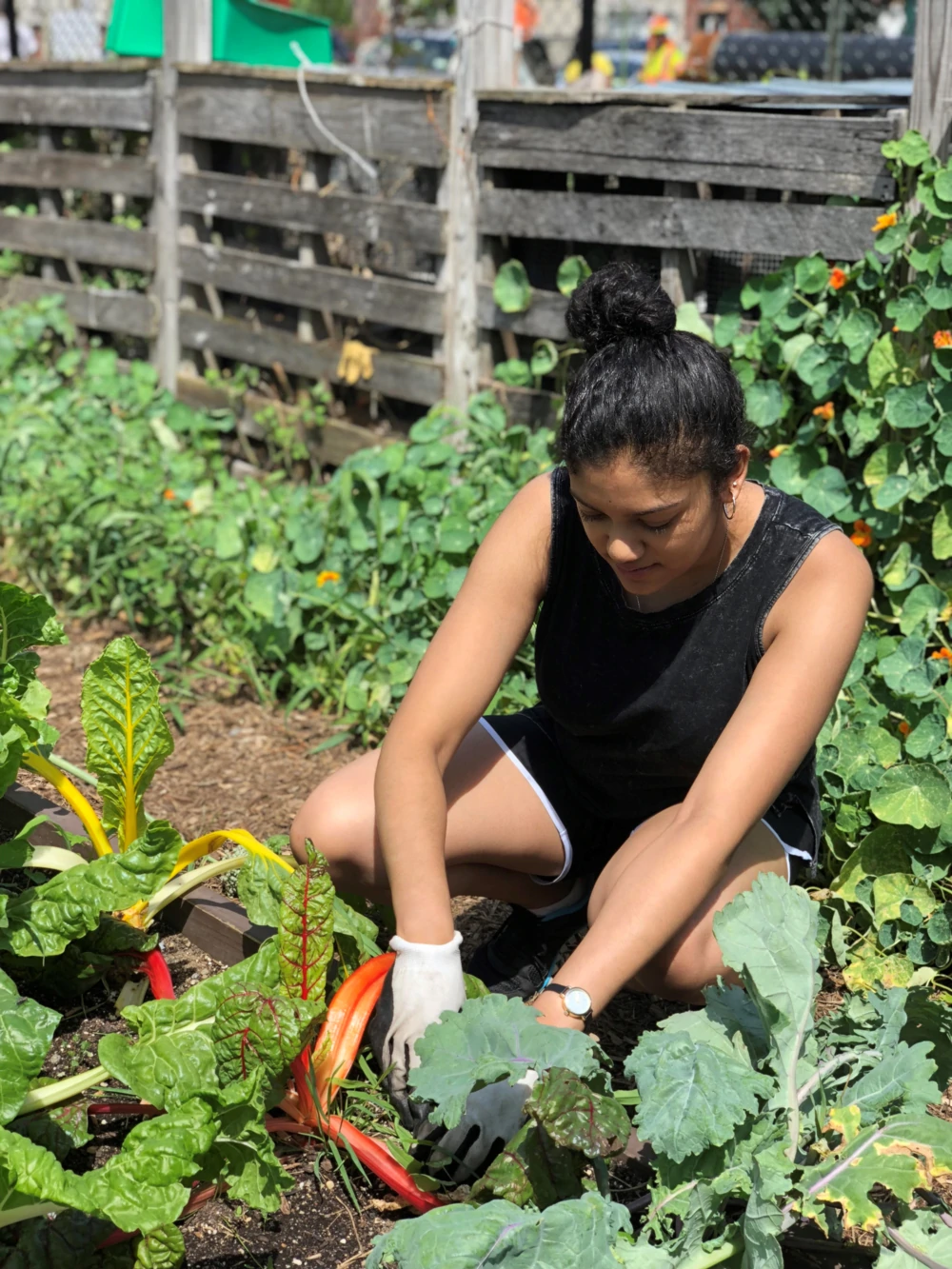
Today, MST includes hundreds of thousands of families living in agrarian reform settlements across the country. These communities are home to small farms, cooperative food production, schools, and vibrant cultural programs. Families grow fruits, vegetables, grains, and medicinal plants through agroecology—a practical farming method and political movement that builds resilient, community-controlled food systems by combining ecological principles, traditional knowledge, and social change to challenge corporate control and hunger. As practiced by MST and supported by WhyHunger, agroecology empowers communities to steward their land, strengthen local economies, influence public policy, and grow food with dignity, creating long-term solutions to hunger rooted in collective power.
A Decade of Partnership Rooted in Solidarity
For more than a decade, WhyHunger has supported MST through numerous grants, bringing more than $325,000 in long-term solidarity funding. This partnership has helped strengthen local food production, deepen community organizing, and expand leadership opportunities for women and youth in farming communities across Brazil.
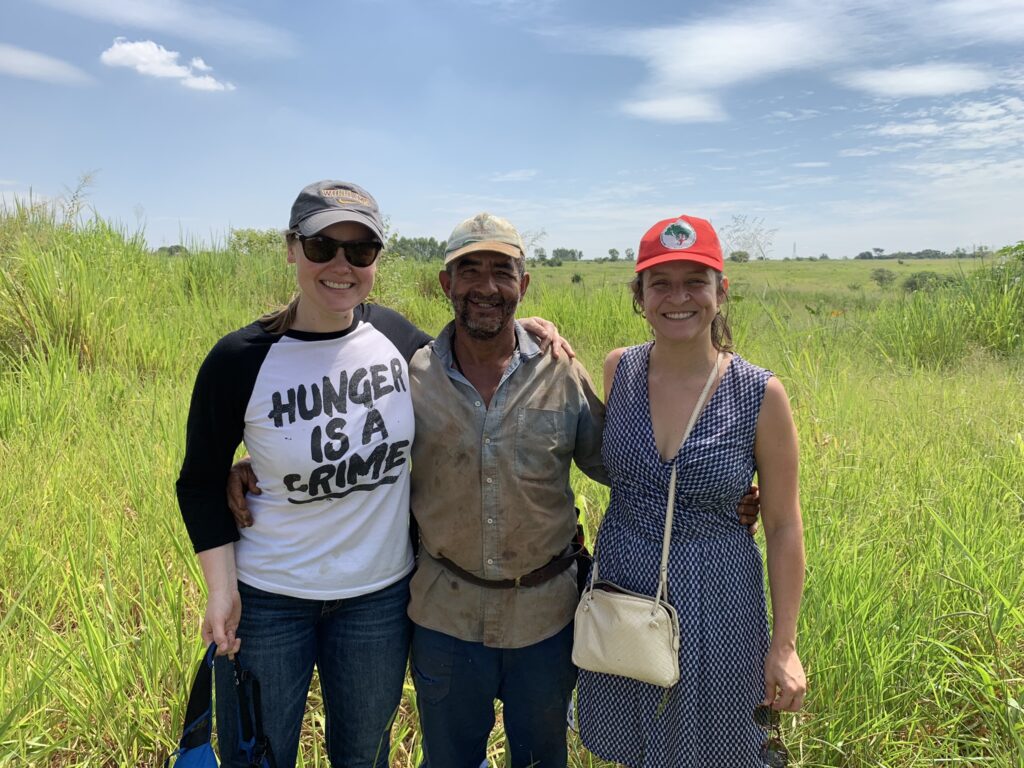
Early projects supported MST families to launch agroecology initiatives that transformed once-abandoned land into productive farms. Other projects helped increase women’s participation in leadership and decision-making, expand youth organizing, strengthen communication networks within settlements, and expand their agroecology school and education program. Over the years, WhyHunger has also supported MST’s work to build healthier rural economies, from cooperative food processing to training programs that help families improve soil health, diversify their crops, and grow nutritious food for their communities.
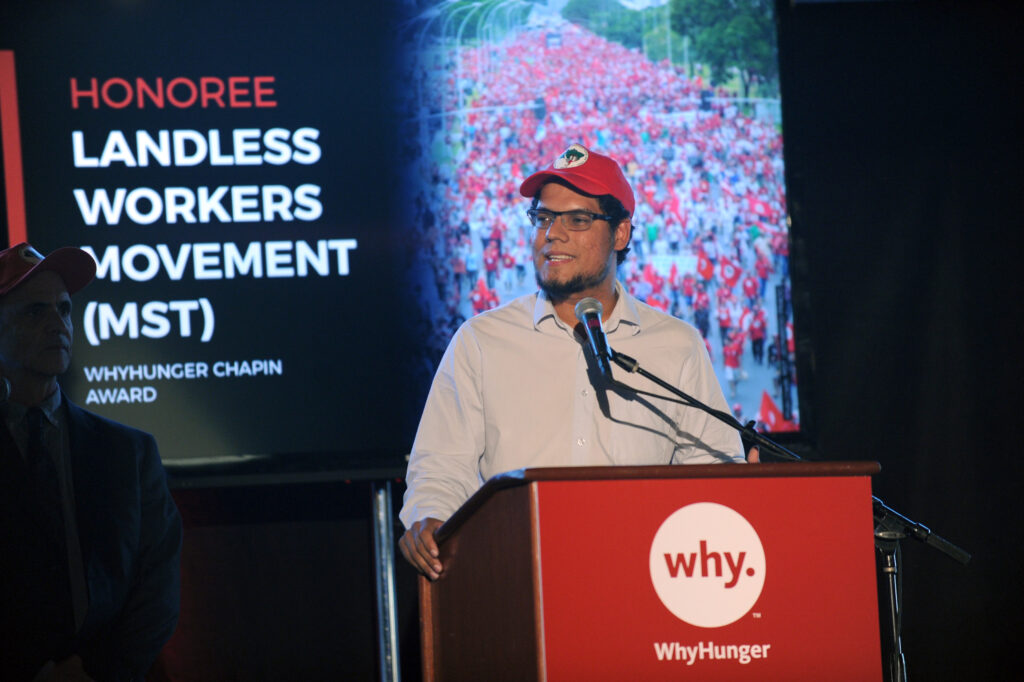
In 2016, WhyHunger honored MST with the WhyHunger Chapin Award, recognizing the movement’s powerful, grassroots approach to food sovereignty and agrarian reform. WhyHunger brought MST leaders to New York City to attend the award ceremony alongside fellow honorees Tom Morello and Kenny Loggins, where they shared their story and spoke directly to supporters about the movement’s work and vision.
During the pandemic, WhyHunger supported MST’s efforts to help 130 women farmers create educational materials on sustainable agriculture and share those resources with isolated rural communities. At a time when government assistance was limited or unavailable, MST stepped in to meet urgent needs, organizing the distribution of food, hygiene products, and basic medical supplies in three northern states to support families facing hunger, illness, and loss of income. This rapid response reflected the movement’s deep roots in community care and its ability to mobilize solidarity when it was needed most.
Agroecology as a Path to a Dignified Life
For MST, growing food goes far beyond production. It is a way to protect local culture, care for the land, and build a better life for future generations. WhyHunger’s support has helped MST families:
- create agroforestry projects that plant fruit trees, vegetables, and native species together
- build biofactories that make natural fertilizers and pest-control products
- organize statewide gatherings where farmers share knowledge and learn from one another
- develop training centers that offer hands-on education in sustainable farming and community leadership
This work is further strengthened by MST’s participation in WhyHunger’s international Agroecology School Cohort, a global network of farmer-led schools that meet monthly to share curricula, exchange teaching approaches, and collectively advance the movement to end hunger. These global conversations reinforce the idea that agroecology is not only a local practice, but part of a shared, international effort rooted in solidarity and learning across borders. Together, these projects make farming more sustainable, reduce dependency on industrial chemicals, and increase families’ ability to grow healthy food year-round. Women and youth have been especially central to this work, organizing cooperatives, leading agroecology schools, and sharing traditional farming knowledge across regions.
Growing a Future Where Communities Thrive
MST’s work shows that when farming families have access to land, resources, and education, they can grow more than food— they can grow stronger, more resilient communities. Their commitment to agroecology and cooperation provides a hopeful alternative to industrial agriculture and helps create local economies that value people, nature, and cultural traditions.
WhyHunger is honored to be one of MST’s long-time allies. This partnership is grounded in shared values and a shared belief: ending hunger means ensuring that people everywhere have the right and the power to grow their own food with dignity. In a recent conversation, a member of MST emphasizes how WhyHunger’s support has enabled them to continue their work on the ground and deepen their agroecology school:
“WhyHunger has been providing us with support that has allowed us to continue accompanying work in our sectors and it was a wonderful surprise to learn of the agroecology cohort support to our school. This makes us really happy because this center is really focused on the process of strengthening agroecology and its public policies.”
Together, this partnership demonstrates how sustained grassroots support fuels long-term, community-driven solutions to end hunger.
Click here to learn more about the MST.
Para Português, clique aqui.