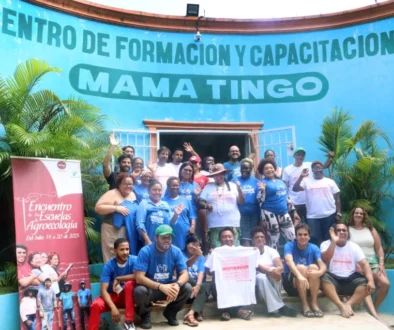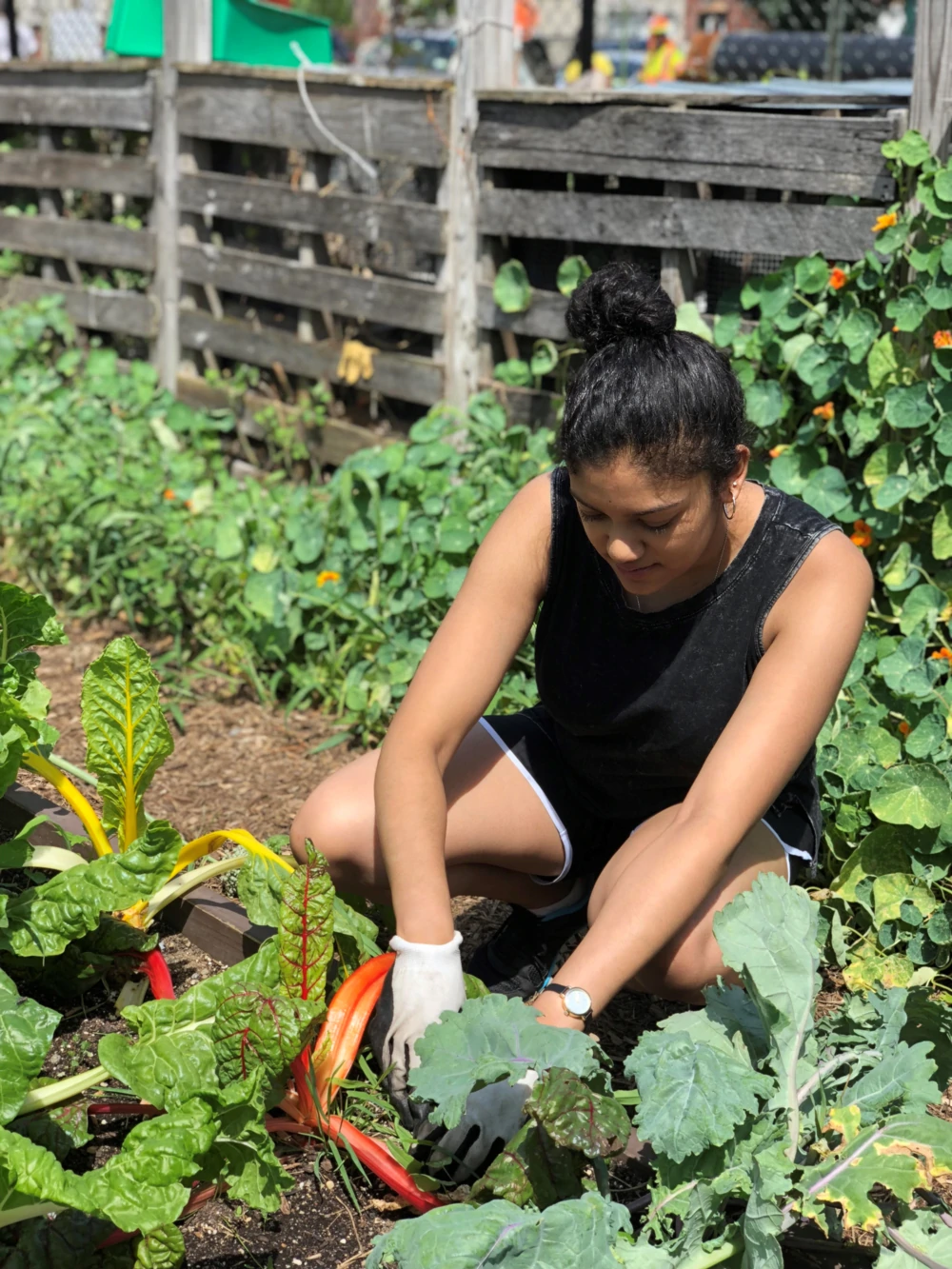
After returning from a 10-day delegation centered around agroecology in Bolivia, Aminta Zea, a consultant who works on WhyHunger’s international Agroecology School Cohort project, shares her reflections, research, and insights on radical tradition, the scientific and ideological framework of Agroecology in Bolivia, and more.
Introduction:
The transformation of Bolivia’s political economy at the turn of the 21st century is emblematic of the revolutionary potential of agrarian social movements. The leadership and organizational success of smallholder farmers in Bolivia has provided radical, community-oriented solutions for combating the financialization of agriculture—a phenomenon represented throughout the Latin American hemisphere, which has pioneered the definition of agroecology as a way of being, living, and producing, rather than as an exclusive scientific practice. Bolivia’s agrarian class formation provides an underestimated yet critical case study on how agroecologists are agitators for structural change, emphasizing the linked struggles for self-determination, self-sufficiency, autonomy, and change from below.
In February 2025, I received grant funding on behalf of WhyHunger and a scholarship from the Alliance for Global Justice to accompany a 10-person delegation to the department of La Paz. This delegation, organized by the Alliance for Global Justice, aimed to visit small-scale farmers who integrated agroecology as a principal scientific and ideological framework. Our goal was to engage in reciprocal learning exchanges, bear witness to grassroots practices, and strengthen international linkages rooted in anti-imperialist solidarity. Contending with the contradictions in Bolivia’s political economy due to the 2019 coup and the ideological rifts between President Luis Arce and former-President Evo Morales, the delegation witnessed ideological and productive tensions in various productive regions throughout the department of La Paz. Although some of these conflicts are rooted in the deeper national biographies that compose the struggles for self-determination throughout Bolivia, it is undeniable that they have been heightened by the current political uncertainty, which we expect to culminate in the upcoming 2025 Presidential Elections.
Writing about the Bolivian radical tradition is a historical and journalistic task; like an agroecologist recovering ancestral ways of land stewardship, my contribution to the prevailing discourse contours the emerging contradictions and relations of power, territory, and social reproduction emanating from the current phase of Bolivian socialism.
Critical Agroecological Thought:
Miguel Altieri, Eric Holt-Giménez, and Peter Rosset have defined agroecology not merely as a set of agricultural techniques, but as “a science, a practice, and a movement”—a framework that integrates ecological science with peasant-led political struggle.
Agroecology, in this conception, is fundamentally about transforming food systems through a grassroots-led process that challenges the structural roots of hunger, inequality, and ecological degradation.
As part of a broader political movement, agroecology is tied to the defense of territory, cultural identity, and popular sovereignty—it is both a response to crisis and a proposal for systemic change, demanding a redistribution of power in food systems and society at large. In Bolivia, this is particularly evident through the integration of agroecological and anti-imperialist principles into state policy and constitutional reform. Agroecology makes no distinction between plurinational sovereignty and anti-imperialism; both are necessary to generate social change that can permeate the state, international organizations, and the rules of financial capitalism. Critical agroecological thought in Bolivia is informed by the spatial politics of campesino, seeking to reclaim control over land, labor, and life.
It is crucial to remember that there can be no self-determination without food sovereignty; the Bolivian experience teaches us that food sovereignty must be envisioned as a mode of social mobilization that leads to agrarian class formation.
These principles were codified into Bolivia’s legal framework with the 2009 Constitution, which includes the right to food sovereignty. Article 255 explicitly recognizes the importance of food sovereignty, agroecology, and community-based economic models, thereby revolutionizing its food and economic systems. It represents a paradigm shift away from input-intensive industrial agriculture toward systems grounded in biodiversity, local knowledge, and food sovereignty.
Bolivia, a country of convergence, where bleached Andean peaks stretch across the horizon, embracing winds that carry moisture from the Amazon basin, exhibits tremendous biodiversity; its geography not only impacts production, but also relations among different ethnic groups throughout the country. Within a single day’s journey, the landscape shifts dramatically—from high-altitude puna grasslands dotted with alpaca herders, to cloud forests bursting with citrus groves and medicinal plants. Vertical agriculture, a legacy of Incan engineering, carves terraces into mountain faces, where potatoes, maize, and fava beans thrive at dizzying altitudes. These landscapes are not only ecological wonders; they are political landscapes too, cultivated by communities who form the backbone of one of the most significant political experiments in 21st-century Latin America.
Over 300 crops compose its resilient, multi-scalar food systems, reified through ancestral farming traditions that challenge the ecological degradation and displacement resulting from the monoculture imperative. This resilience is grounded in both the ‘long trajectory’ of agroecology—rooted in Indigenous systems like aynoqas, aytas, and suka kollus—and the ‘short trajectory’ which saw agroecology institutionalized beginning in the 1970s as a response to the Green Revolution and rural depeasantization.[1] Year-round production cycles, calibrated to ecological memory rather than the violent calculus of commodity futures, offer an insurgency against the financialization of life itself.
In Bolivia, agroecology makes no distinction between plurinational sovereignty and anti-imperialism; both are necessary to generate social change that can permeate the state, international organizations, and the rules of financial capitalism. Critical agroecological thought in Bolivia is inseparable from the historical development of agrarian class struggle in the Andes, where land dispossession, state neglect, and extractive capitalism have long structured rural life. This tradition of resistance has matured into organized political formations that draw from both Indigenous communal land practices and peasant syndicalist organizing.
The consolidation of the Movement Toward Socialism (MAS-IPSP) in the early 2000s illustrates the dialectical relationship between agrarian struggle and state formation. Rooted in alliances among cocalero unions, rural workers’ syndicates, and Indigenous sovereignty movements, MAS emerged through years of militant mobilization across the countryside. These formations, forged through road blockades, water wars, and collective land recoveries, coalesced into a formidable political force. This evolution was also supported by grassroots education and participatory methods, such as the farmer-to-farmer methodology championed by programs like PIDAASSA and the National Soil Platform, which spread agroecological practices across seven departments and over 9,000 hectares of land. The 2005 election of Evo Morales—a former coca grower and union leader—represented a structural shift in power toward Bolivia’s agrarian classes. His government marked the first time campesino and Indigenous movements had direct influence over national governance, reorienting state priorities toward food sovereignty, territorial defense, and the redistribution of land and resources.
Land, Memory, and Resistance in Sapahaqui and Tocaña:
In the arid, sun-bleached heights of Sapahaqui, agroecology takes root in adversity. Jagged mountains loom over a highland terrain defined by dry winds and ochre soil. Yet from these conditions emerge tightly-knit cooperatives, where producers recover native seeds and use solar dehydration to preserve surplus. These practices are more than survival—they are a refusal to cede autonomy to global commodity chains. Local infrastructure replaces extractive intermediaries, enabling producers to retain value and control over their production cycles.
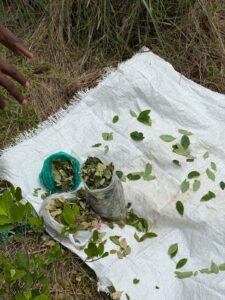 Tocaña, by contrast, is enveloped in subtropical lushness. Situated in the Nor Yungas, this Afro-Bolivian community practices agroecology not only as cultivation but as cultural defense. Bananas, citrus, and ancestral coca grow in diverse plots that draw on ecological memory, not synthetic inputs. During our visit, we attended a local farmers’ fair where residents sold produce, exchanged seeds, and filled the plaza with the sound of Saya—a traditional Afro-Bolivian rhythm that blends African percussion with Andean melodies. Drumming and song animated the market, turning it into a celebration of biocultural memory and community autonomy. We also spoke in great detail with coca leaf farmer and community educator Edgar Gemio, who shared how agroecology and coca cultivation are used in Tocaña not only as a means of subsistence, but as a tool for defending cultural identity and reinforcing intergenerational knowledge.
The coca plant, sacred and maligned, forms the backbone of a political economy that resists prohibitionist logics. Here, coca is medicine, ritual, and livelihood—affirming Afro-Indigenous territorial claims and revalorizing historically criminalized knowledge. These events encapsulate the principles of Latin American agroecological thought: territory as a space for the reproduction of life, the preservation of native seeds, the conservation of soils, sustainable water use, and the ‘dialogue of knowledges’ between ancestral and scientific practices.
In Tocaña, agroecology is not only practiced—it is lived and danced.
These territories exemplify what economist Samir Amin termed “delinking”: the strategic exit from global market dependency. Delinking is not isolationism—it is the redirection of domestic value creation toward collective well-being, ecological regeneration, and sovereignty from below. Whether in Sapahaqui’s solar co-ops or Tocaña’s coca groves, Bolivia’s agroecologists are building an economy calibrated not by export imperatives but by memory, subsistence, and political agency.
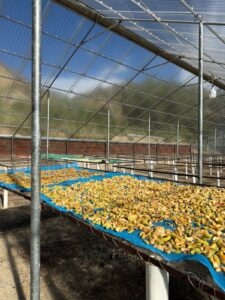 Roger Ramírez, a local official and agroecological advocate in Sapahaqui, offered insights that grounded our delegation’s experience in the material realities of local governance and productive development. Sapahaqui, he explained, is not just a site of scarcity but of innovation: a productive valley of approximately 16,000 inhabitants as of 2024, known for cultivating grapes, peaches, and cactus fruit under temperate conditions ranging from 18–24°C. Agroecology here does not merely serve as an alternative—it is a confrontation, both epistemological and material.
“Agroecology is not about feeding the world,” he told us. “It’s about freeing it.”
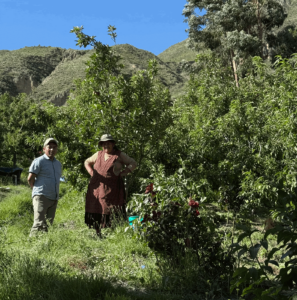 The town is considered a cuna—or cradle—of the Bartolina Sisa movement, a historically rooted and nationally influential campesina organization. Ramírez emphasized how agroecological cooperatives in Sapahaqui use solar dehydrators, community-run processing plants, and shared storage infrastructure to transform fragile crops into durable, value-added products. These networks reduce dependency on intermediaries and volatile wholesale markets, while also serving as intergenerational spaces of learning. Youth and elders collaborate to preserve native seeds, steward soil health, and sustain territorial autonomy. Agroecology in Sapahaqui is “a living mosaic”—less a model to replicate than a present-tense strategy rooted in ancestral memory and daily resistance.
Contradictions in the Revolutionary Process:
Despite the historical gains of Bolivia’s agrarian movements, the path of agroecological transformation remains deeply contested. Since 2019, the Bolivian left has been marked by ideological fractures. The rupture between Evo Morales and his successor, Luis Arce, reflects tensions over the direction and ownership of the revolutionary project. While both figures emerged from the MAS-IPSP and share commitments to Indigenous sovereignty and redistribution, their divergence speaks to broader structural pressures: the encroachment of technocratic governance, increasing reliance on lithium extraction, and differing visions for reconciling state power with grassroots autonomy.
Agroecology sits at the heart of these contradictions. On one hand, it has been championed through legislation, public funding, and international solidarity. On the other, it is threatened by the return of agro-industrial lobbying, market pressures, and the uneven implementation of food sovereignty policy. These tensions are not anomalies—they reflect the broader contradiction between revolutionary state-building and the pressures of a global capitalist system that demands extraction, export, and centralization. Agroecologists in Bolivia must navigate a terrain shaped by both internal fissures and external coercion. Yet their persistence illustrates a vital capacity to hold contradiction, to resist co-optation while remaining embedded in institutional terrain. This adaptability reflects a distinctly Latin American way of resisting domination—one shaped by colonial history, uneven development, and creative survival.
Rather than trying to erase contradiction, agroecological communities in Bolivia live within it. They mix ancestral farming practices with new technologies, navigate state policies without surrendering their autonomy, and use memory and land to build a different kind of modernity.
This approach doesn’t aim to fit into the logic of global capitalism—it seeks to outlast it, with a strategy rooted in resilience, improvisation, and refusal.
Toward an Agroecological Future:
 The relationship between agroecology and sovereignty in Bolivia also takes shape through its transnational linkages with countries like Venezuela—nations facing sanctions and resisting geopolitical hegemony. In a closed-door meeting held during the delegation, members met with César Trómpiz, the Venezuelan Ambassador to Bolivia, where I served as interpreter.
  The exchange illuminated how agroecology is not simply a domestic program, but a diplomatic practice. Both countries, as members of ALBA-TCP, have endorsed food sovereignty as a pillar of hemispheric integration. In recent years, Bolivia has strengthened trade relationships with Venezuela, particularly in agricultural inputs, processed goods, and knowledge-sharing around seed banking and urban farming initiatives. The two states have signed agreements to deepen cooperation in biotechnology, food storage, and seed distribution—efforts aimed at reducing dependency on U.S.-controlled markets and transgenic seed monopolies. Trómpiz emphasized Venezuela’s interest in amplifying agroecological exchange with Bolivia, drawing parallels to its communal councils and urban agriculture programs.
These alliances point toward an emerging bloc that sees agroecology not as nostalgia, but as geopolitical strategy: a way of building counter-power through the soil itself. Bolivia’s agrarian diplomacy is quietly redefining regional integration—not through GDP metrics or private-sector led liberalization, but through shared resistance to extraction and imperial overreach. As with the terraces of the Andes, such cooperation is layered, reciprocal, and designed to endure.
As global capitalism falters and ecological collapse accelerates, agroecology offers a path forward. But this path is neither linear nor uncontested. It resists definition by state metrics or NGO indicators, slipping the grasp of models that seek to contain it. Agroecology in Bolivia is best understood not as a fixed system, but as a refusal to be captured—a mosaic of practices, territories, and rhythms that defy capitalist legibility. It generates a third space of meaning, an agrarian imagination grounded in refusal, care, and collective memory. This insurgent horizon cannot be measured solely by productivity or replication, but by the ways it fragments and reconfigures power’s coordinates. Bolivia’s agroecologists have made their choice clear. As detailed in key historical studies, this movement’s strength lies in its multifunctionality—bridging ecological sustainability, economic self-determination, and cultural sovereignty through an evolving framework rooted in memory, law, and land.
About the Author:
Aminta Zea is a Nicaraguan-Palestinian trilingual interpreter, journalist, and international consultant whose work supports social movements, agroecological initiatives, and grassroots organizing across Latin America, Africa, Asia, and Europe. She works with WhyHunger’s International Agroecology School, leading interpretation, translation, and logistics for a multi-continental cohort of educators and farmers. Aminta’s political and professional commitments are grounded in language justice, anti-imperialist praxis, and the cultivation of transnational solidarity. She is a selected scholar in the 2025 Critical Theory Workshop at the École des Hautes Études en Sciences Sociales (EHESS) in Paris, where her research focuses on agrarian resistance, food sovereignty, and the construction of socialist governance in the Latin American hemisphere.